
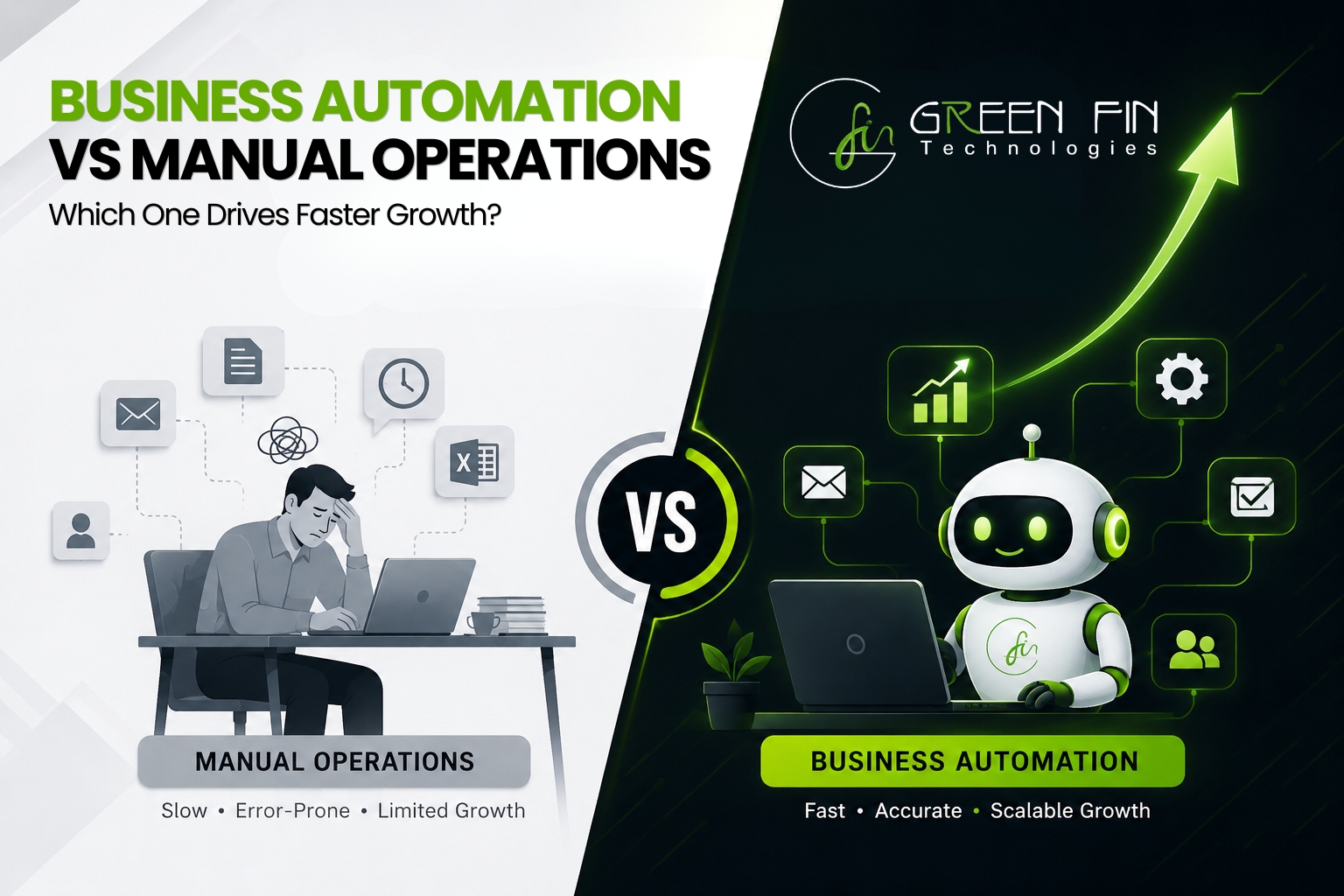
Business Automation vs Manual Operations: Which One Drives Faster Growth?
In today’s fast-moving digital world, businesses are under constant pressure to deliver faster, smarter, and more efficiently. The real question is no longer whether businesses should evolve – it’s how fast they can adapt.
This brings us to one of the biggest debates in modern business:
Business Automation vs Manual Operations
Which One Truly Drives Faster Growth?
Let’s break it down.
What Are Manual Operations?
Manual operations are traditional business processes handled by people without automated systems. Tasks like data entry, invoice creation, customer follow-ups, inventory tracking, or report generation are often performed manually.
While manual methods may work for small-scale businesses initially, they become difficult to manage as operations grow.
Common Challenges of Manual Operations:
- Human errors and mistakes
- Slow workflow processes
- Time-consuming repetitive tasks
- Limited scalability
- Higher operational costs
- Difficulty tracking performance
Imagine managing hundreds of customer inquiries manually every day. Eventually, delays, missed opportunities, and inefficiencies start affecting business growth.
What Is Business Automation?
Business automation uses technology and software to handle repetitive tasks, streamline workflows, and improve operational efficiency with minimal human intervention.
From CRM systems and automated marketing campaigns to AI-powered customer support and workflow management tools – automation transforms how businesses operate.
Examples of Business Automation:
- Automated email marketing
- Invoice and billing systems
- Inventory management software
- AI chatbots for customer support
- Automated HR and payroll systems
- Workflow approvals and task assignments
Automation allows businesses to focus on strategy, innovation, and customer experience instead of repetitive administrative work.
Why Automation Drives Faster Growth
1. Speed & Efficiency
Automation performs tasks in seconds that might take employees hours to complete manually.
For example:
- Automated invoices are generated instantly
- Customer responses can be sent 24/7
- Reports are created in real-time
This increased efficiency allows businesses to serve more customers without increasing workload.
2. Reduced Human Error
Manual processes are vulnerable to mistakes like:
- Wrong data entries
- Missed deadlines
- Duplicate records
- Miscommunication
Automation minimizes these risks by following predefined workflows consistently and accurately.
Better accuracy means:
✅ Better customer trust
✅ Better financial management
✅ Better operational control
3. Scalability Without Chaos
A growing business means more customers, more transactions, and more data.
Manual systems often collapse under growth pressure. Teams become overwhelmed, processes slow down, and productivity decreases.
Automation helps businesses scale smoothly by handling increased workloads automatically – without needing massive increases in staff.
4. Cost Savings
While automation requires an initial investment, it significantly reduces long-term operational costs.
Businesses save money through:
- Reduced manual labor
- Faster processing times
- Lower error correction costs
- Improved productivity
Automation helps companies do more with less.
5. Better Customer Experience
Today’s customers expect:
- Fast responses
- Quick delivery
- Personalized experiences
- 24/7 support
Automation helps businesses meet these expectations effortlessly.
AI chatbots, automated ticket systems, and CRM tools ensure customers receive timely and professional service every time.
Happy customers = Faster business growth.
Does Manual Operation Still Have Value?
Absolutely.
Manual operations are still important in areas requiring:
- Creativity
- Human decision-making
- Emotional intelligence
- Relationship building
Automation should not replace humans completely – it should empower them.
The most successful businesses combine:
Human creativity + Smart automation
This creates the perfect balance between efficiency and personalization.
The Future Belongs to Automated Businesses
Businesses that rely entirely on manual operations risk:
- Falling behind competitors
- Losing productivity
- Struggling to scale
- Missing growth opportunities
Meanwhile, companies embracing automation are:
✅ Growing faster
✅ Operating smarter
✅ Delivering better customer experiences
✅ Making data-driven decisions
Automation is no longer a luxury – it’s becoming a necessity for sustainable growth.
Final Verdict: Which One Wins?
When it comes to speed, scalability, efficiency, and long-term growth:
Business Automation Clearly Takes the Lead.
Manual operations may help businesses start, but automation helps businesses scale.
The future of successful businesses lies in leveraging technology to simplify operations, increase productivity, and unlock new growth opportunities.