
Best Software Testing Tools in 2026
Software testing tools are categorized based on their role in the Software Development Life Cycle (SDLC). Choosing the right tool depends on your team’s technical expertise, application type (web, mobile, or desktop), and whether you prefer open-source flexibility or enterprise-grade support.
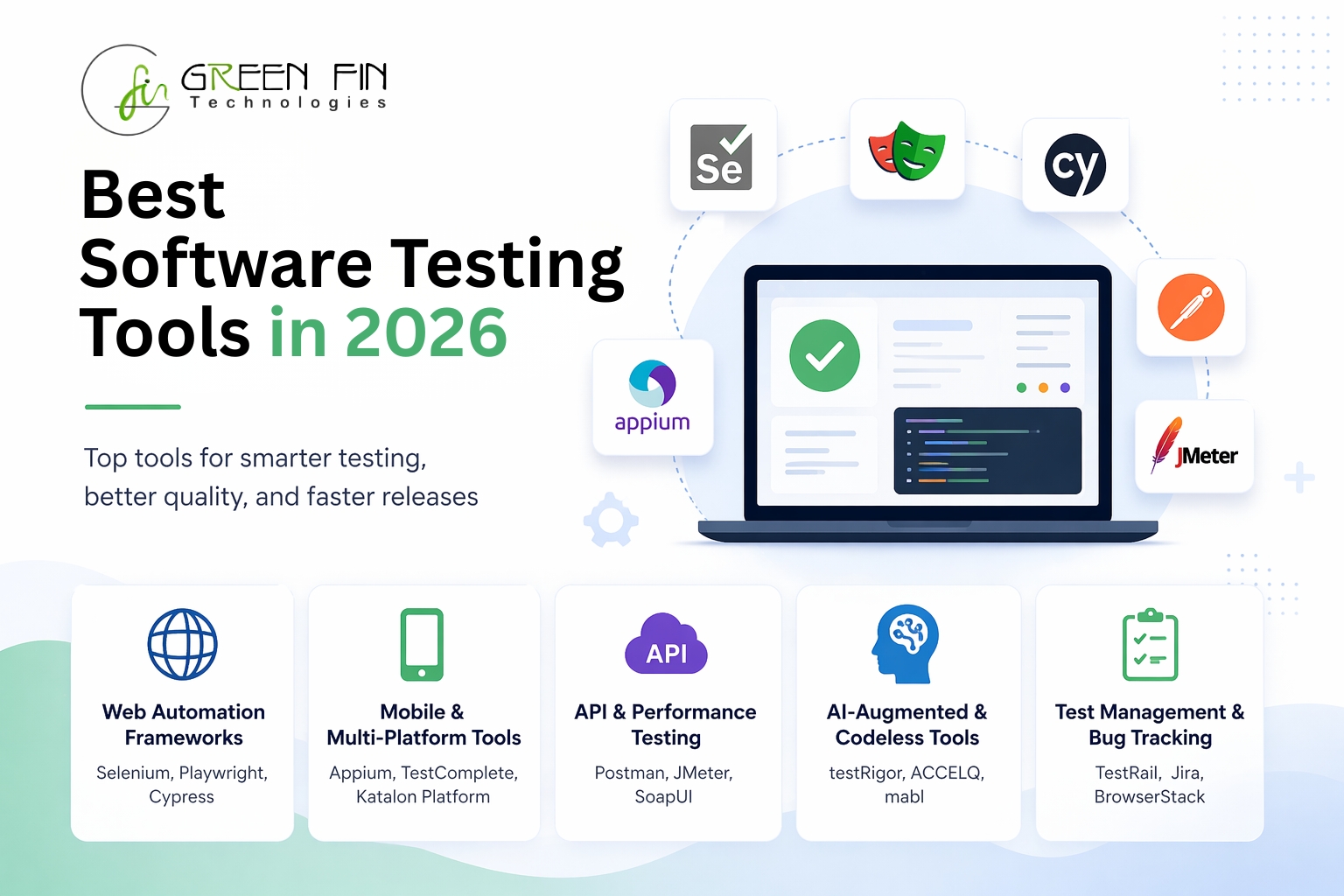
1. Web Automation Frameworks
These tools are used to simulate user interactions within a web browser to ensure functional correctness and cross-browser compatibility.
▪️ Selenium

The industry standard for open-source web automation. It supports multiple languages (Java, Python, C#, etc.) and browsers, making it highly flexible but requiring strong coding skills.
▪️ Playwright

A modern, high-speed framework from Microsoft that supports Chromium, WebKit, and Firefox. It is known for its built-in recorder and fast execution.
▪️ Cypress

A developer-centric tool that runs directly in the browser. It features real-time reloading and deep debugging, making it ideal for testing modern JavaScript applications like React and Vue.
2. Mobile and Multi-Platform Tools
Designed to validate applications across various physical devices and operating systems.
▪️ Appium

An open-source giant for mobile automation. It allows you to test native, hybrid, and mobile web apps for both iOS and Android using a single API.
▪️ TestComplete
A commercial tool by SmartBear that automates desktop, web, and mobile apps. It offers both codeless recording and scripted options.

A low-code solution that unifies web, API, mobile, and desktop testing. It is highly valued by teams looking for a quick startup without extensive coding.
3. API and Performance Testing
These tools focus on the “headless” parts of an application, ensuring data integrity and system stability under pressure.
▪️ Postman

The leading platform for API development and automated testing. It is essential for validating REST and SOAP service behavior.
An open-source heavyweight for performance and load testing. It simulates heavy traffic to identify bottlenecks before they affect end-users.
▪️ SoapUI
Specialized for functional and security testing of enterprise-level web services.
4. AI-Augmented and Codeless Tools
The latest generation of tools uses AI to reduce manual maintenance and allow non-technical members to create tests.
▪️ testRigor

An AI-powered tool that lets you write tests in plain English. It features “self-healing” capabilities to automatically adapt to UI changes.
▪️ ACCELQ

A cloud-based, no-code platform focused on business-process automation for enterprise apps like Salesforce and SAP.
▪️ mabl

An intelligent platform that uses machine learning to automatically find regressions and maintain stable test suites.
5. Test Management and Bug Tracking
Used to organize test cases, track progress, and log defects across the team.
▪️ TestRail
A comprehensive test management tool that centralizes manual and automated results, providing real-time visibility into release readiness.
▪️ Jira
While primarily for project management, it is the standard for bug tracking and integrates with nearly all major testing tools.
▪️ BrowserStack

Provides a cloud-based infrastructure (real device grid) to execute tests across 3,000+ browser and device combinations.