
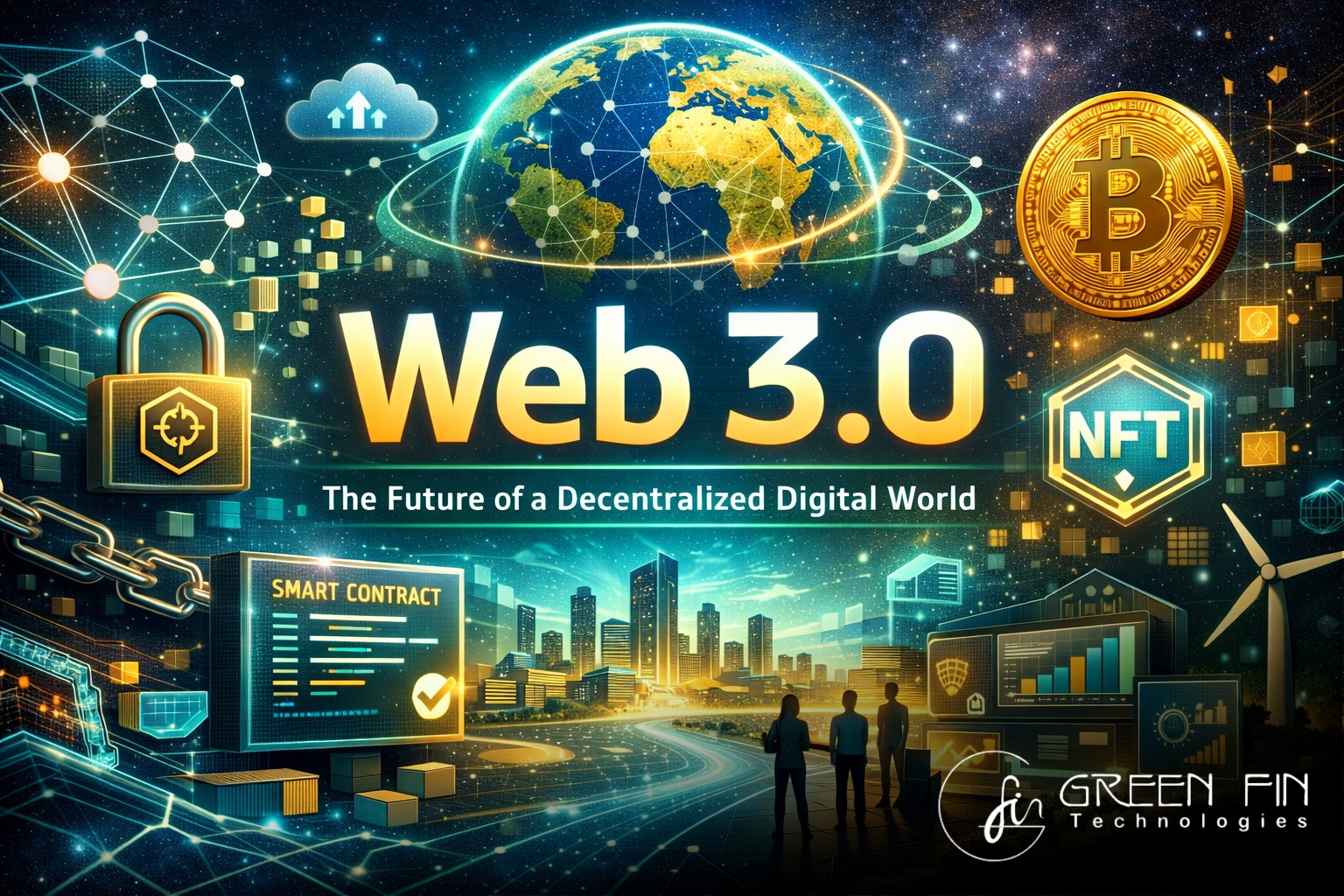
Web 3.0: The Future of a Decentralized Digital World
The internet is evolving – and Web 3.0 is leading the transformation. From how we own data to how digital transactions take place, Web 3.0 is redefining trust, transparency, and user control. Unlike previous versions of the web, Web 3.0 is built on decentralization, blockchain technology, and smart contracts, creating a more secure and user-empowered digital ecosystem.
At Green Fin Technologies, we believe Web 3.0 is not just a technological upgrade – it’s a shift toward a fairer, smarter, and more open internet.
Understanding the Evolution: Web 1.0 to Web 3.0
- Web 1.0 (Read-Only Web): Static websites with limited interaction.
- Web 2.0 (Read-Write Web): Social media, cloud platforms, and user-generated content – but centralized control by big tech companies.
- Web 3.0 (Read-Write-Own Web): A decentralized internet where users own their data, digital assets, and identities.
Web 3.0 removes intermediaries and gives power back to users through cryptographic trust and decentralized networks.
Key Technologies Behind Web 3.0
1. Blockchain
A distributed ledger that ensures transparency, immutability, and security without relying on central authorities.
2. Smart Contracts
Self-executing programs that automate agreements, reduce costs, and eliminate human error.
3. Decentralized Applications (dApps)
Applications that run on blockchain networks instead of centralized servers, ensuring uptime, transparency, and user control.
4. Cryptocurrencies & Tokens
Digital assets that enable borderless payments, governance participation, and decentralized finance (DeFi).
Why Web 3.0 Matters for Businesses
Web 3.0 is not limited to crypto enthusiasts – it offers real value for businesses across industries:
- Enhanced Data Security: User data is encrypted and controlled by users.
- Greater Transparency: Every transaction is verifiable on the blockchain.
- Lower Operational Costs: Smart contracts reduce intermediaries and manual processes.
- New Revenue Models: Tokenization, NFTs, and decentralized marketplaces.
- Global Accessibility: Permissionless systems allow worldwide participation.
Real-World Use Cases of Web 3.0
- Decentralized Finance (DeFi): Lending, borrowing, and trading without banks.
- NFTs & Digital Ownership: Authentic digital assets for art, gaming, and media.
- Supply Chain Management: Transparent tracking and verification.
- Healthcare: Secure patient data sharing.
- Identity Management: Self-sovereign digital identities.
Challenges of Web 3.0
While promising, Web 3.0 also faces challenges:
- Scalability issues
- Regulatory uncertainty
- User experience complexity
- Limited awareness and adoption
However, rapid innovation and growing enterprise interest are addressing these challenges every day.
The Role of Green Fin Technologies in Web 3.0
At Green Fin Technologies, we help businesses embrace the Web 3.0 revolution by offering:
- Blockchain & smart contract development
- Web 3.0 application solutions
- Secure fintech integrations
- Scalable decentralized platforms
- Consulting for digital transformation
Our mission is to bridge innovation with real-world business needs, ensuring secure, efficient, and future-ready solutions.
Conclusion
Web 3.0 represents the next phase of the internet – one that prioritizes trust, ownership, and decentralization. As businesses and users shift toward this new digital paradigm, early adoption will be the key to long-term success.
The future of the internet is decentralized – and the future starts now.
If you’re ready to explore Web 3.0 solutions, Green Fin Technologies is here to guide you every step of the way.
