
ERP Integration for FinTech Businesses: Streamlining Operations for Scalable Growth
In today’s fast-moving financial technology landscape, FinTech companies must operate with speed, accuracy, and compliance – all while delivering seamless customer experiences. As businesses grow, managing finance, operations, compliance, customer data, and reporting across disconnected systems becomes a major challenge.
This is where ERP (Enterprise Resource Planning) integration plays a transformative role for FinTech businesses.
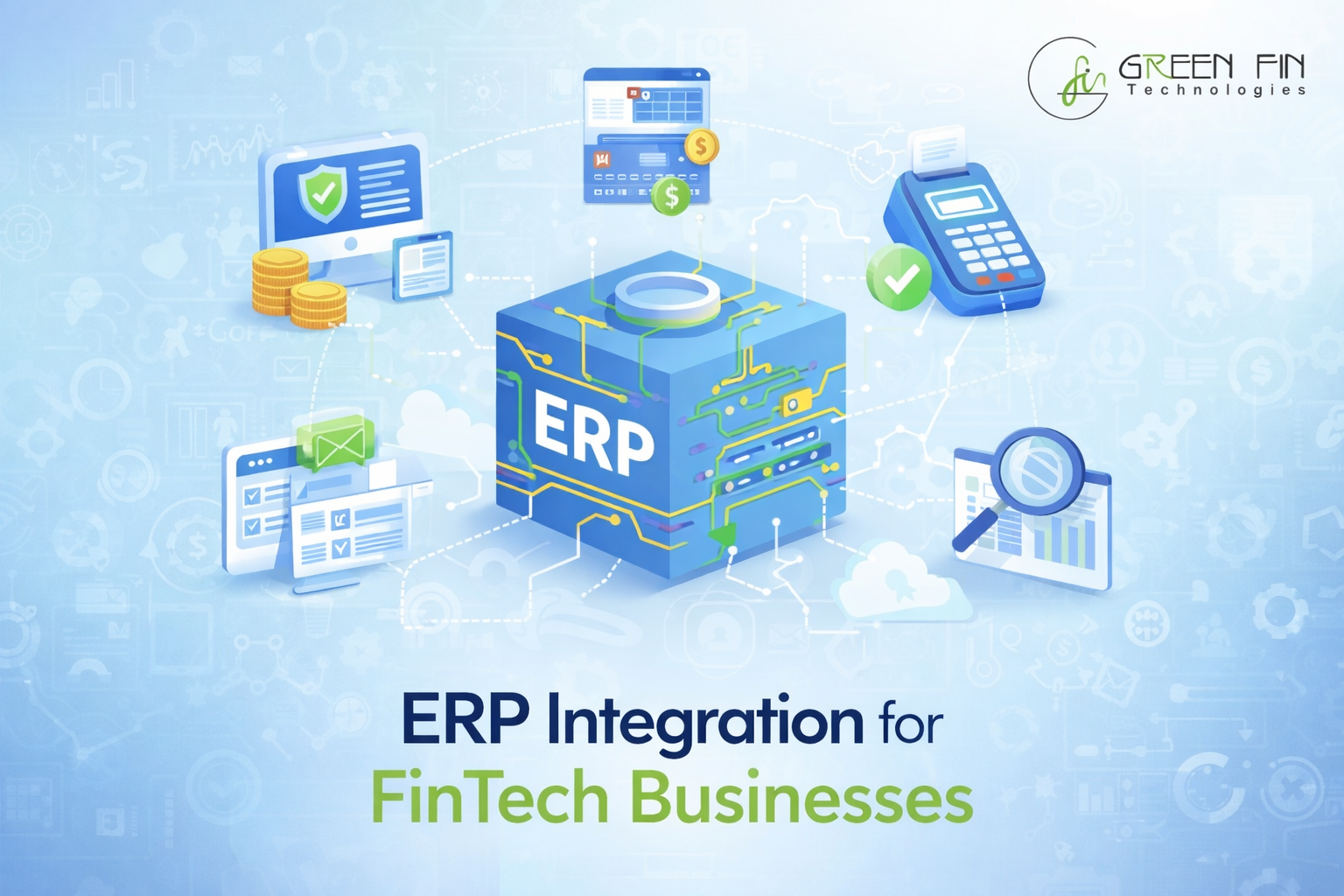
Let’s explore how ERP integration is reshaping FinTech operations and why it’s becoming essential for long-term success.
What is ERP Integration in FinTech?
ERP integration connects your core financial systems with operational tools such as:
- Payment gateways
- CRM platforms
- Compliance & KYC systems
- Accounting software
- Mobile and web applications
Instead of working in silos, all business processes flow through a centralized ERP system – providing real-time data, automation, and complete operational visibility.
Why FinTech Companies Need ERP Integration
1. Real-Time Financial Control
ERP systems unify transactions, revenues, expenses, and settlements into one platform. This allows FinTech leaders to monitor cash flow instantly and make smarter decisions.
2. Improved Compliance & Reporting
Regulatory requirements are complex in FinTech. ERP integration automates audit trails, financial reporting, tax calculations, and compliance documentation – reducing risk and manual errors.
3. Operational Automation
Tasks like invoicing, reconciliations, payroll, vendor payments, and customer billing become automated, saving time and boosting productivity.
4. Seamless Customer Experience
When ERP connects with CRM and payment systems, customer data updates in real time – enabling faster support, accurate billing, and smoother transactions.
5. Scalable Growth
As transaction volumes increase, ERP systems handle higher workloads effortlessly without compromising performance or accuracy.
Key ERP Features for FinTech Businesses
A well-integrated ERP solution should offer:
- Financial management & accounting
- Payment reconciliation
- Risk & compliance tracking
- Inventory and vendor management (for hardware/payment infrastructure)
- HR & payroll
- Real-time analytics and dashboards
Popular ERP platforms for FinTech include Odoo, SAP, Oracle NetSuite, and Microsoft Dynamics – often customized to meet regulatory and transaction-heavy environments.
Common Challenges Without ERP Integration
FinTech companies operating without integrated ERP systems often face:
- Disconnected data across platforms
- Manual reconciliation errors
- Slow reporting cycles
- Compliance risks
- Limited business visibility
These inefficiencies not only increase costs but also slow innovation and customer trust.
How GreenFin Technologies Helps with ERP Integration
At GreenFin Technologies, we specialize in building intelligent ERP integration solutions tailored specifically for FinTech businesses.
Our services include:
✅ Custom ERP implementation
✅ API integration with payment gateways & financial platforms
✅ Compliance-ready system architecture
✅ Real-time data synchronization
✅ Scalable cloud-based ERP solutions
Whether you’re a startup or an expanding FinTech enterprise, we ensure your ERP ecosystem is secure, automated, and future-ready.
Final Thoughts
ERP integration is no longer a luxury for FinTech companies – it’s a strategic necessity. By centralizing operations, automating workflows, and ensuring regulatory compliance, ERP systems empower FinTech businesses to scale faster, operate smarter, and compete more effectively.
If you’re ready to transform your FinTech operations with seamless ERP integration, GreenFin Technologies is here to help.