
The Seven Phases of the Software Development Life Cycle
The Software Development Life Cycle (SDLC) is a structured process used to design, develop, and maintain high-quality software. It typically consists of seven key phases: planning, analysis, design, development, testing, deployment, and maintenance.
With the help of modern tools like Jira, Git, Visual Studio Code, Jenkins, and Selenium, teams can efficiently manage, build, test, and deploy software solutions.
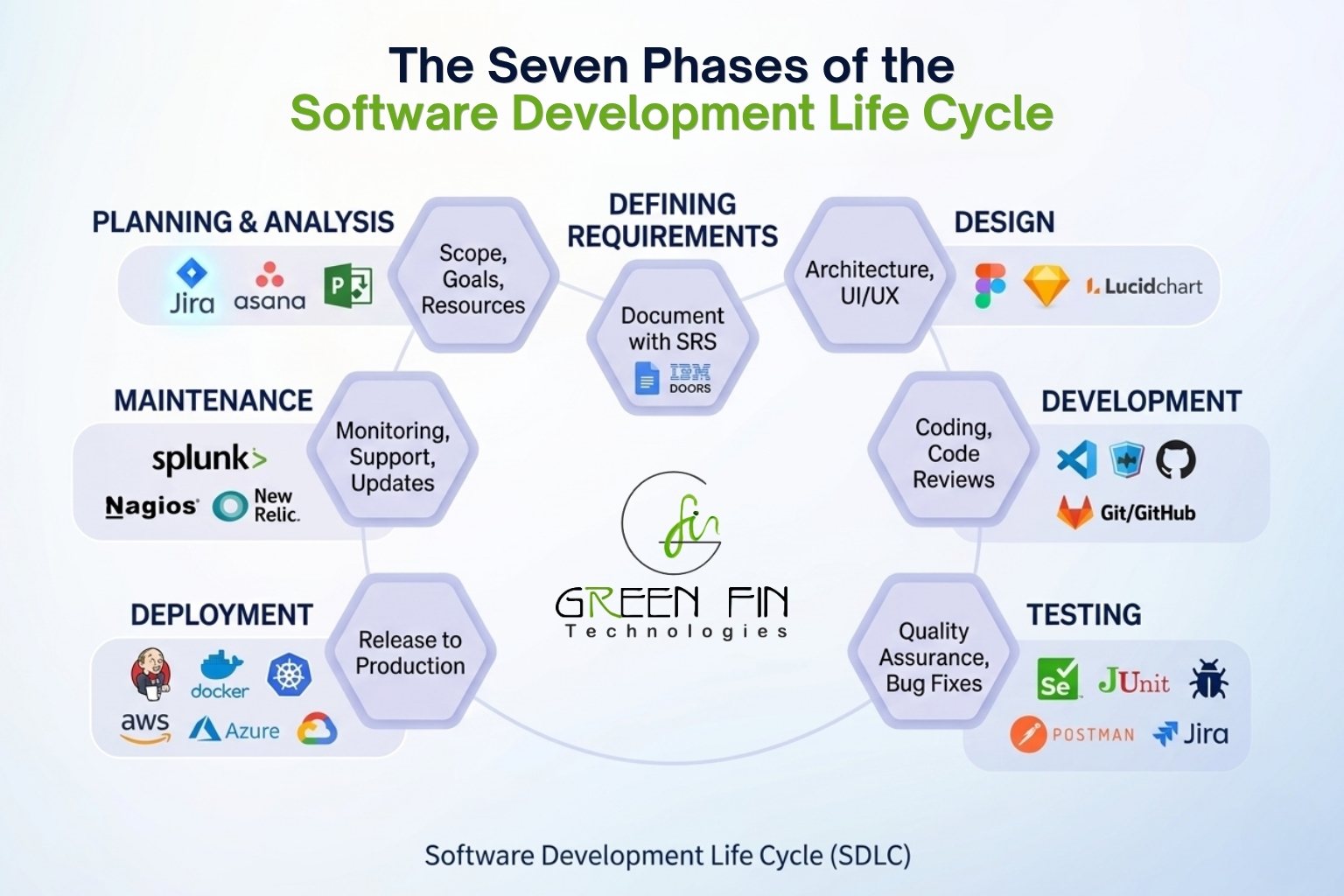
Key Phases and Tools
1. Planning and Requirement Analysis
Activities:
- Define project scope
- Set goals and objectives
- Allocate resources
- Establish timelines
Tools:
- Jira
- Asana
- Trello
- Microsoft Project
2. Defining Requirements (SRS)
Activities:
- Document detailed requirements
- Create Software Requirement Specification (SRS)
- Align stakeholders on expectations
Tools:
- Confluence
- MS Word / Google Docs
- IBM Engineering Requirements Management DOORS
3. Design
Activities:
- Create system architecture
- Design user interfaces (UI/UX)
- Plan database structures
Tools:
- Figma
- Adobe XD
- Lucidchart
- Sketch
4. Development (Coding)
Activities:
- Write and implement code
- Conduct code reviews
- Perform unit testing
Tools:
- Visual Studio Code (VS Code)
- IntelliJ IDEA
- Git / GitHub
5. Testing
Activities:
- Identify bugs and errors
- Validate software functionality
- Ensure requirements are met
Tools:
- Selenium
- JUnit
- Postman
- Jira
6. Deployment
Activities:
- Release software to production
- Configure environments
- Ensure system stability
Tools:
- Jenkins
- Docker
- Kubernetes
- AWS / Azure / GCP
7. Maintenance
Activities:
- Monitor system performance
- Fix bugs and issues
- Update and improve features
Tools:
- Splunk
- Nagios
- New Relic
Conclusion
The SDLC provides a clear roadmap for building efficient, scalable, and high-quality software. By following these seven phases and using the right tools, businesses can streamline development processes, reduce risks, and deliver better products faster.
