
How AI Agents Are Transforming Workflows
In today’s fast-paced digital landscape, businesses are constantly searching for ways to work smarter, faster, and more efficiently. Enter AI agents-intelligent systems designed to automate tasks, streamline processes, and make data-driven decisions with minimal human intervention. What was once considered futuristic is now rapidly becoming the backbone of modern workflows.
What Are AI Agents?
AI agents are software systems that can perceive their environment, process information, and take actions to achieve specific goals. Unlike traditional automation tools that follow rigid rules, AI agents learn, adapt, and improve over time. They can handle complex tasks such as customer interactions, data analysis, decision-making, and even collaboration across departments.
The Shift from Automation to Intelligence
Traditional automation focused on repetitive, rule-based tasks. While useful, it lacked flexibility. AI agents go a step further by introducing intelligence into workflows. They can analyze patterns, predict outcomes, and adjust their actions accordingly.
For example:
- Instead of simply sending scheduled emails, AI agents can determine the best time to send messages based on user behavior.
- Rather than just processing data, they can extract insights and recommend next steps.
This shift is transforming workflows from static processes into dynamic, adaptive systems.
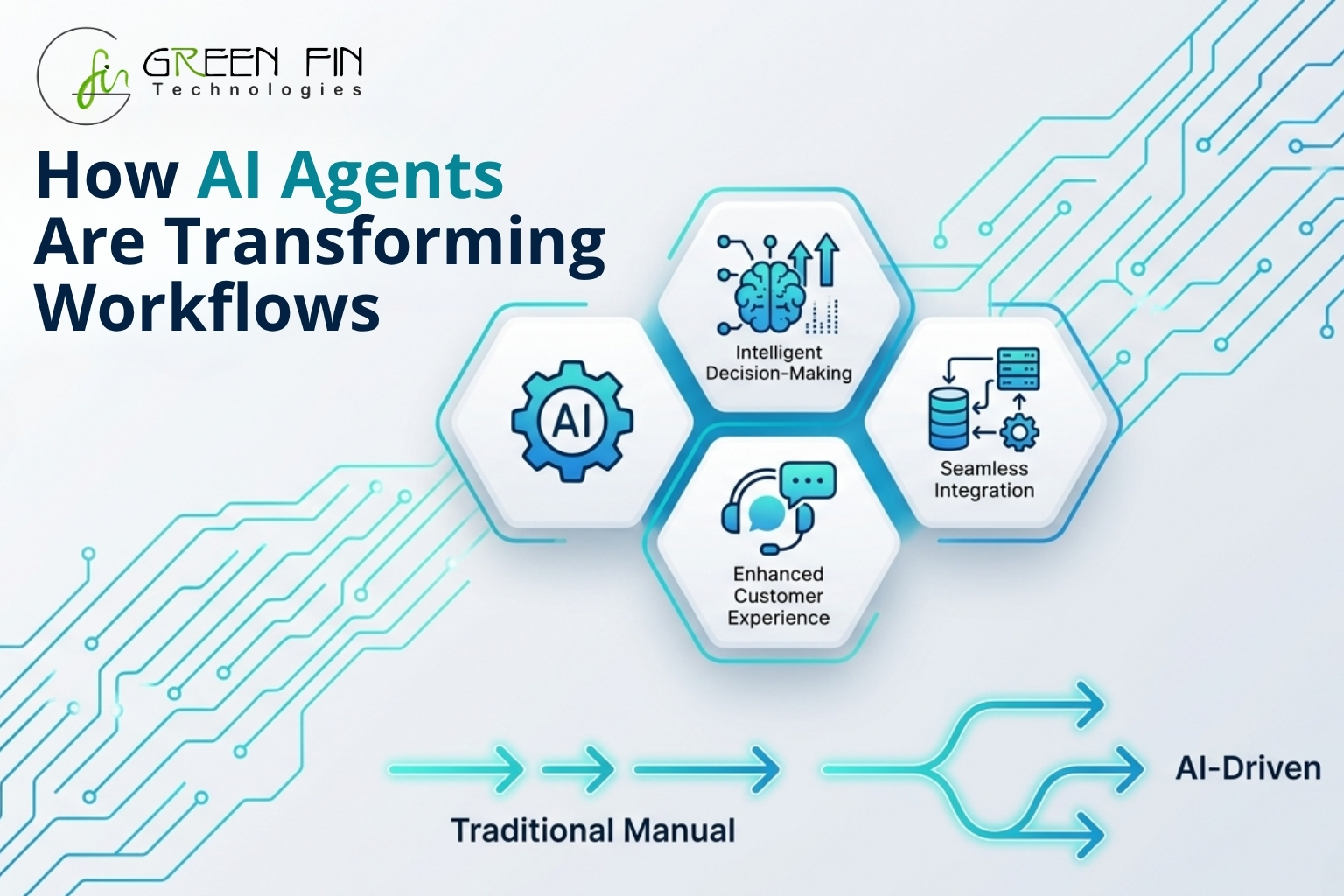
Key Ways AI Agents Are Transforming Workflows
1. Process Automation at Scale
AI agents can handle large volumes of repetitive tasks such as data entry, invoice processing, and report generation. This not only reduces human error but also frees up employees to focus on more strategic work.
2. Intelligent Decision-Making
AI agents analyze vast amounts of data in real time to support decision-making. Whether it’s forecasting sales trends or optimizing supply chains, they provide actionable insights that drive better outcomes.
3. Enhanced Customer Experience
From chatbots to virtual assistants, AI agents are revolutionizing customer interactions. They provide instant responses, personalized recommendations, and 24/7 support—leading to higher customer satisfaction and engagement.
4. Seamless Integration Across Systems
Modern businesses rely on multiple tools and platforms. AI agents can integrate across these systems, ensuring smooth data flow and eliminating silos. This creates a unified and efficient workflow environment.
5. Continuous Learning and Improvement
One of the most powerful features of AI agents is their ability to learn. They continuously improve their performance based on new data, making workflows more efficient over time without constant manual updates.
Real-World Applications
AI agents are already making an impact across industries:
- Finance: Automating fraud detection, risk assessment, and financial reporting
- Healthcare: Assisting in diagnosis, patient monitoring, and administrative tasks
- E-commerce: Personalizing shopping experiences and optimizing inventory
- Marketing: Automating campaigns, analyzing customer behavior, and improving targeting
Benefits for Businesses
Implementing AI agents into workflows offers numerous advantages:
- Increased Efficiency: Faster task completion with fewer errors
- Cost Reduction: Lower operational costs through automation
- Scalability: Easily handle growing workloads without proportional increases in staff
- Better Insights: Data-driven decisions that improve overall performance
- Enhanced Productivity: Employees can focus on innovation and strategy
Challenges to Consider
While AI agents offer immense potential, businesses should also be mindful of:
- Data Privacy and Security: Ensuring sensitive information is protected
- Integration Complexity: Aligning AI systems with existing infrastructure
- Change Management: Helping teams adapt to new technologies
- Ethical Considerations: Maintaining transparency and accountability in AI decisions
The Future of Workflows
The future of workflows lies in human-AI collaboration. AI agents will not replace humans but will augment their capabilities. As these systems become more advanced, businesses that embrace AI-driven workflows will gain a significant competitive edge.
Organizations that invest in AI today are not just optimizing their processes-they are building a foundation for a smarter, more agile future.
Conclusion
AI agents are no longer a luxury-they are a necessity for businesses aiming to stay ahead in a competitive market. By transforming workflows into intelligent, adaptive systems, they are redefining how work gets done.
At GreenFin Technologies, we believe that the future belongs to businesses that leverage AI to its fullest potential. Whether you’re looking to automate processes, enhance customer experiences, or drive smarter decisions, AI agents are the key to unlocking your next level of growth.