
Challenges FinTech Startups Face When Implementing AI
Artificial Intelligence (AI) is rapidly transforming the financial technology (FinTech) landscape. From fraud detection and credit scoring to personalized banking and real-time risk assessment, AI has become a strategic necessity rather than a luxury. However, while AI offers enormous potential, implementing it is far from easy-especially for FinTech startups.
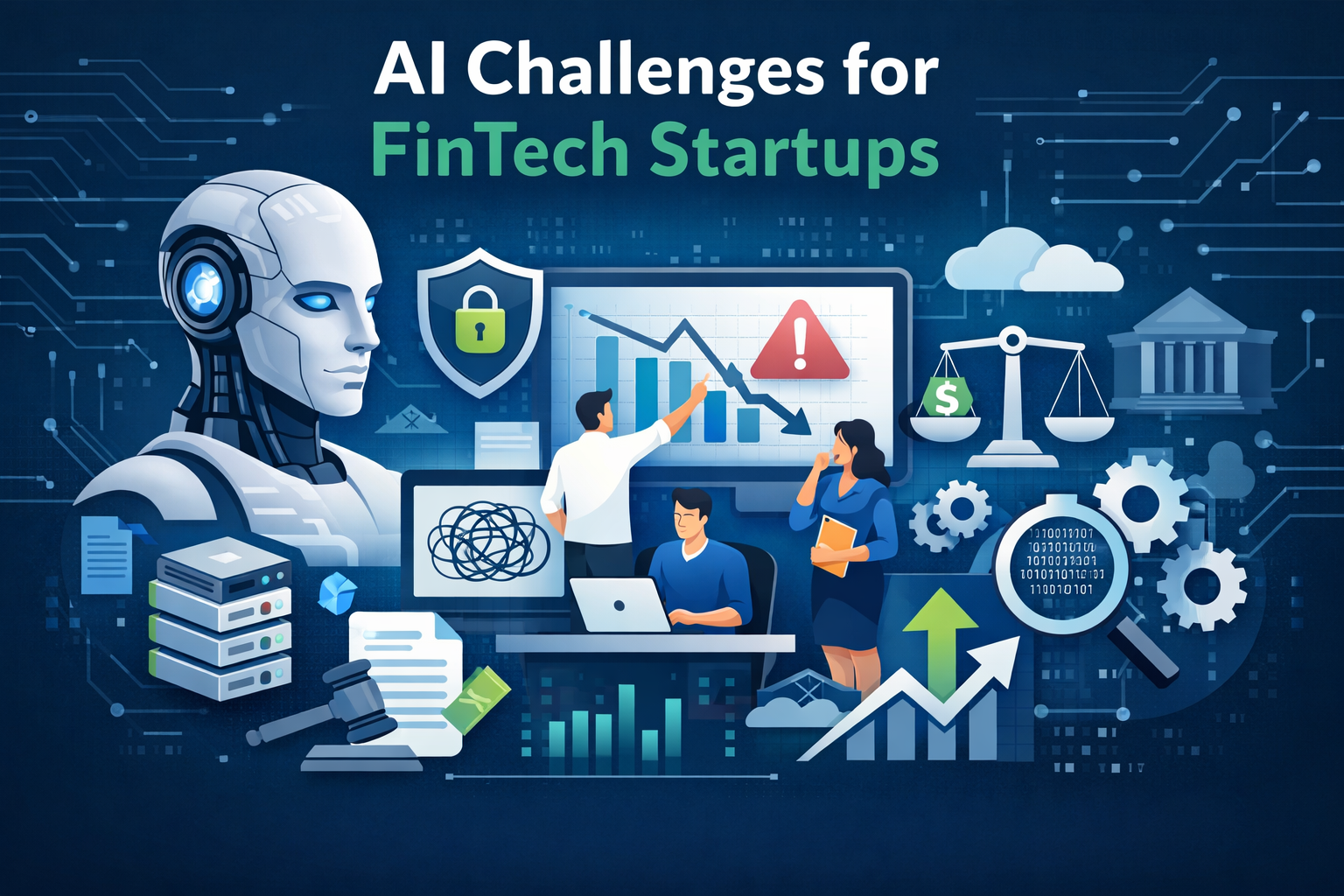
In this blog, we explore the key challenges FinTech startups face when implementing AI and how they can navigate these obstacles effectively.
1. Data Quality and Availability
AI systems rely heavily on large volumes of high-quality data. Many FinTech startups struggle with:
- Incomplete or inconsistent datasets
- Limited historical data
- Data silos across departments
Poor data quality can lead to inaccurate predictions and biased models, reducing trust in AI-driven decisions. Ensuring clean, well-structured, and relevant data is often one of the biggest hurdles.
2. Regulatory and Compliance Constraints
FinTech operates in a highly regulated environment. AI solutions must comply with:
- Data privacy laws
- Financial regulations
- Industry-specific compliance standards
Startups must ensure transparency, explainability, and auditability in their AI models. Regulatory uncertainty can slow down innovation and increase implementation costs.
3. High Implementation Costs
Developing and deploying AI solutions requires significant investment in:
- Skilled AI professionals
- Infrastructure and cloud resources
- Data acquisition and management
For startups with limited budgets, balancing AI innovation with financial sustainability can be challenging.
4. Lack of Skilled Talent
AI expertise is in high demand, and hiring experienced data scientists, machine learning engineers, and AI architects is both competitive and expensive. Without the right talent, startups may struggle to build scalable and reliable AI systems.
5. Integration with Legacy Systems
Many FinTech startups rely on existing platforms or third-party systems. Integrating AI solutions with these systems can be complex and time-consuming, often requiring:
- System redesigns
- API development
- Workflow restructuring
Poor integration can limit AI effectiveness and delay deployment.
6. Model Transparency and Explainability
AI-driven decisions in finance must be explainable. Black-box models can raise concerns among regulators, partners, and customers. Startups must focus on building AI systems that provide clear reasoning behind decisions, especially for credit approvals, fraud detection, and risk scoring.
7. Security and Ethical Concerns
AI systems are attractive targets for cyberattacks and data breaches. Additionally, biased algorithms can lead to unfair financial decisions. Startups must:
- Secure sensitive financial data
- Monitor AI models for bias
- Ensure ethical AI usage
Failing to address these concerns can damage brand reputation and customer trust.
8. Scalability Challenges
An AI model that works well in pilot stages may struggle under real-world scale. Startups often face difficulties in:
- Handling increased data volume
- Maintaining performance
- Ensuring real-time processing
Building scalable AI infrastructure from the start is critical for long-term success.
How FinTech Startups Can Overcome These Challenges
Despite these challenges, FinTech startups can successfully implement AI by:
- Investing in strong data governance
- Partnering with experienced AI solution providers
- Using cloud-based and modular AI architectures
- Prioritizing compliance and explainability
- Starting small with pilot projects and scaling gradually
Conclusion
AI has the power to redefine financial services, but its implementation comes with significant challenges-especially for FinTech startups. By understanding these obstacles and adopting a strategic, responsible approach, startups can unlock AI’s full potential while staying compliant, secure, and scalable.
At GreenFinTech, we help FinTech companies navigate AI adoption with smart, secure, and compliant solutions designed for real-world impact.